
Get Kids Practicing More at Home (Without a Battle)
Youth coaches only get a couple hours per week with athletes. This blog explores ways to get kids excited about continuing their work at home.
6/9/20265 min read
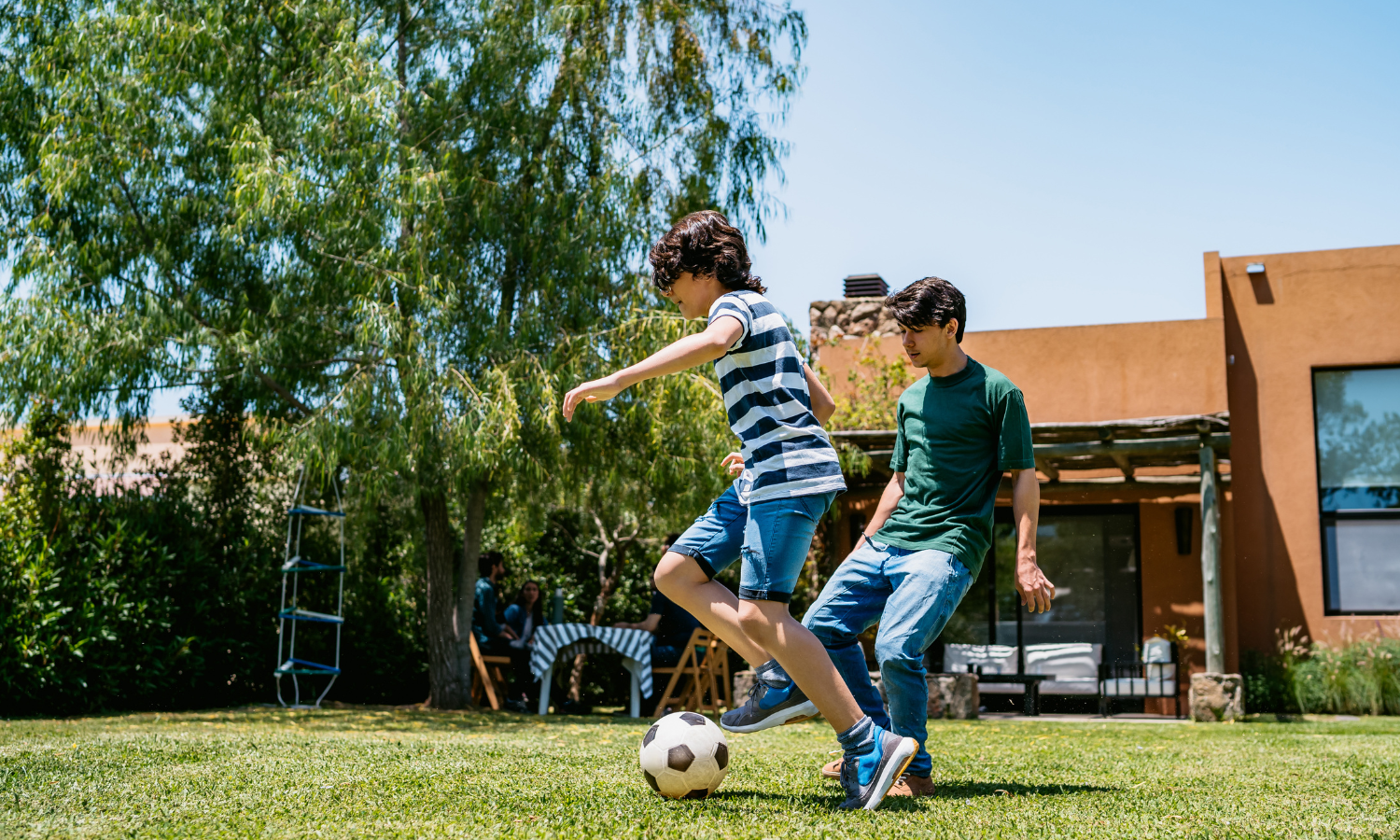
Every coach has had this moment.
You run a great practice. You teach one or two key things. You can literally see kids improving while you’re there… and then a week goes by and it feels like you’re starting over.
It’s not because kids don’t care. It’s because most youth athletes don’t get enough reps between team practices to lock skills in. Team practice time is limited, attention is split across the whole group, and kids spend way more time at home than they do with you.
That’s why “at-home practice” is the real development multiplier. Not two-hour sessions. Not intense workouts that turn the sport into a job. Just consistent reps that add up.
And here’s the best part: you don’t have to convince kids to practice for an hour a day. You just have to make it easy enough that they’ll do 10 minutes without fighting you.
There’s actually research behind why this works. In motor learning, spreading practice out (distributed practice) often improves learning and retention compared with cramming everything into one long session. One study on motor sequence learning found distributed practice enhanced learning compared to massed practice in their task setup. The point isn’t that every skill works the exact same way. The point is that frequent, bite-sized reps are a powerful way to build skills and keep them.
So let’s talk about how coaches can set this up, how parents can support it, and how you can get kids practicing at home without turning your house into a second practice facility.
Why kids don’t practice at home (even when they want to get better)
Most kids don’t avoid home practice because they’re lazy. They avoid it because it feels like one of these:
Too big: “I need to do a whole workout” is overwhelming.
Too vague: They don’t know what to do, so they do nothing.
Too lonely: Practicing alone feels boring or frustrating.
Too pressured: It feels like punishment, not progress.
And if you want a kid to practice more, you don’t fix that with more speeches. You fix it with a better system.
That system is what I call short-burst practicing: short sessions that are specific, repeatable, and easy to start. Ten minutes. Twenty swings. Fifty touches. One wall drill. One shooting series.
When practice is small enough to start, kids actually start it.
The coach’s role: make at-home practice a “team thing,” not a parent battle
A lot of coaches hope parents will handle home practice, and a lot of parents hope coaches will handle development. The best teams do both.
If you want kids practicing at home, it helps when the coach creates a simple structure. Not something that adds a ton of work for you. Just a system that gives kids clarity and makes it feel connected to the team.
The simplest tool: a weekly at-home challenge
Here’s the format that works best:
One skill focus for the week
One short routine (10 minutes)
A simple tracker (checkmarks, notes, or quick video proof if you want)
A small reward that celebrates effort, not talent
That’s it.
It can be as simple as:
“This week’s challenge is 5 days of 10 minutes. Choose one: wall passes, ball touches, shooting form, dribbling moves, or footwork. Check off your days. If you hit 5, you get a shoutout and a sticker.”
Kids love challenges because it feels like a game. Parents like it because it removes the “What should we work on?” guesswork.
And it lines up with a habit-building idea that’s pretty consistent across behavior science: make the habit tiny, make it easy to start, and tie it to something that’s already part of your routine. BJ Fogg’s Tiny Habits approach is built around this exact concept of scaling habits down so they’re easy to follow through on.
You don’t have to turn your team into a behavior science lab. You just need to make practice feel doable.
Make the challenge public (in a positive way)
One of the best things you can do is celebrate effort out loud. Not just goals or points. Effort.
At practice, you say:
“Shoutout to the kids who got their 5 checkmarks this week. That consistency matters.”
Now the culture becomes: “We practice at home.” Not because we’re forced to… but because that’s what our team does.
The parent’s role: be the “starter,” not the “coach”
Parents don’t need to run full sessions or correct every detail. In fact, too much coaching at home can backfire fast because it creates tension and makes the sport feel like a constant evaluation.
The parent job is usually simpler: help your kid start and keep it light.
If you can help them start 10 minutes, you’ve done your job. Most kids will keep going once they’re moving.
One of the best parent tricks is attaching practice to a normal routine:
right after homework
right after dinner
before showers
before screen time
“Ten minutes, then you can do your thing.”
Short. Clear. Predictable.
Also, it’s worth remembering how much parents already do in youth sports. Project Play has highlighted the time burden sports creates for families, and youth sports costs and logistics are real. So the goal here isn’t adding another major commitment. It’s creating a small, sustainable routine that actually fits into family life.
Make it fun without making it silly
Kids practice more when it feels like progress and play, not punishment. That doesn’t mean everything has to be goofy. It just means you give it a little spark.
A few easy options:
Streaks: “How many days in a row can you hit 10 minutes?”
Levels: “Hit 5 days this week = Level 1. Hit 10 days over two weeks = Level 2.”
Family challenge: parent does 10 minutes too (planks, squats, shooting, whatever)
Beat your best: keep one simple stat (most juggles, most makes, fastest cone time)
What you’re really doing is giving the kid a reason to come back tomorrow.
The part coaches and parents often miss: teach the “why” behind home practice
Kids are more willing to practice when they know what it’s for.
So instead of “Go practice,” try:
“Ten minutes a day is how you make game-day feel easier.”
Or:
“You don’t need to practice everything. Just practice one thing until it feels automatic.”
This is also where distributed practice matters again. Motor learning research regularly points out that spacing practice can support retention and consolidation. A kid who does five short sessions in a week often builds better consistency than a kid who does one big session and then nothing for six days.
Common pitfalls that make home practice die fast (and how to avoid them)
The biggest reason home practice disappears is friction.
Friction looks like:
the equipment is buried in a garage
the plan is unclear
the practice is too long
the parent turns it into a critique session
the kid feels like it’s never good enough
The fix is always the same: make it easier and smaller.
If you want a simple rule:
Home practice should end with your kid feeling capable, not crushed.
That’s how you get them back tomorrow.
