
More Than Just a Jersey Number: The Power of Knowing Your Players
The best coaches know their players beyond stats and drills. Learn how understanding the kids you coach can unlock their confidence, motivation, and full potential on and off the field.
12/22/20254 min read
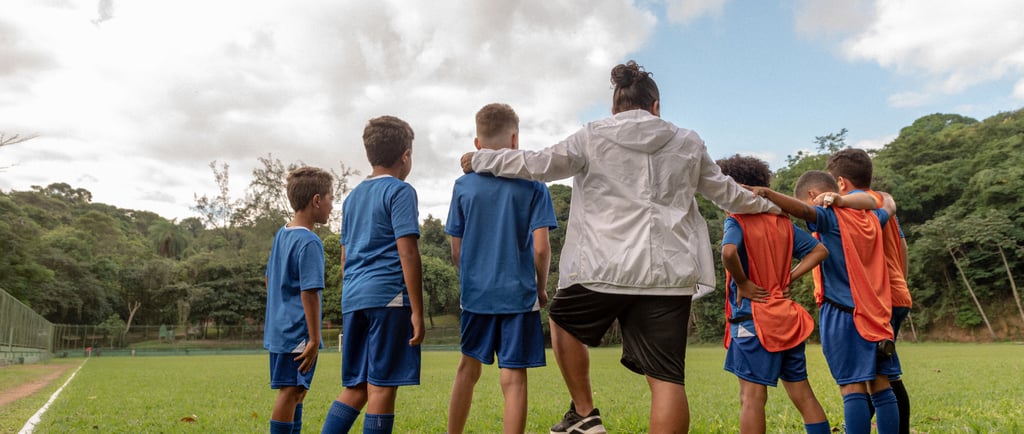
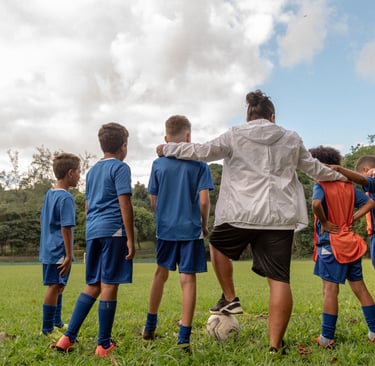
Let’s be honest—youth sports can feel like a blur. There are drills to run, games to win, parents to manage, schedules to juggle, snacks to coordinate… and oh yeah, actual kids to coach. In the middle of it all, it’s easy to focus only on the logistics and forget one huge piece of the puzzle: every player on your team is a person first and an athlete second.
This blog is a reminder—and a call to action—to slow down, zoom in, and take the time to really get to know the kids you're coaching. Because when you do, you unlock their potential in ways that go far beyond the scoreboard.
They're Not Just Pieces on a Game Board
It's easy for coaches and parents alike to fall into the trap of treating young athletes like tools in a toolbox. Need a fast defender? Stick Johnny in the back. Need someone to pitch today? Emma’s got a strong arm—let’s ride her. But here’s the deal: kids are not chess pieces. They’re 8, 9, 10 years old. They’re still figuring out who they are, what they like, and what they’re capable of.
When we coach only to the position, we miss the player.
Great coaches don’t just draw up plays—they draw out potential. And that starts by getting to know who’s under the helmet, behind the glove, or inside the jersey.
Every Kid Is Different (And That’s the Point)
Some kids respond to loud, high-energy motivation. Others shrink the moment voices are raised. Some need a little push to unlock their inner beast mode. Others need permission to fail before they’re ready to fly.
Getting to know your players means recognizing these differences—and adjusting your coaching accordingly.
A 2022 study in the Journal of Sport Psychology in Action found that athletes who felt their coach adapted their style to individual needs reported higher motivation, confidence, and enjoyment in their sport.
That’s not just feel-good fluff. That’s science-backed coaching.
So how do you do it?
Tips for Getting to Know Your Athletes
1. Talk Beyond the Sport
Ask your players about school. Their pets. Their favorite movie. You might find out that your shy second baseman is actually a creative whiz who loves art—and maybe he sees the game like a puzzle to be solved rather than a race to be won.
Quick tip: Have a “question of the day” during warm-ups. “What’s your dream vacation?” “If you had a superpower, what would it be?” These tiny moments build trust faster than any drill ever will.
2. Use Pre-Season Surveys or Player Cards
Create a fun questionnaire for your team. Include things like:
What motivates you?
How do you like to be coached?
What’s your favorite drill?
What stresses you out about games?
You’d be amazed what kids will tell you when you simply ask.
Bonus tip: You can even give them silly questions like “Best pizza topping” or “Favorite pump-up song” to keep things light and fun.
3. Know Their Learning Style
Some kids are visual learners. Others are hands-on. Some need you to walk them through things step-by-step. Others want to just jump in and try.
Take mental notes on who learns best how, and build your practices to include different teaching methods—chalk talks, demonstrations, small-group drills, etc.
If you want better results from your athletes, tailor the experience to their brains—not just their bodies.
Coaching the Whole Child, Not Just the Athlete
There’s a term in education and psychology called “whole child development.” It’s the idea that growth isn’t just about mastering a skill or subject, but nurturing emotional, mental, and social growth too.
That applies to coaching more than you might think.
Think about it:
Does the player need more confidence? That might require small wins in a controlled setting.
Are they distracted or disengaged? Maybe there’s something going on at home or school.
Are they acting out? That could be a call for attention or support, not just discipline.
By knowing your players personally, you’re more equipped to recognize these moments—and coach them through it rather than just around it.
A Quick Note for Parents: Know the Coach Too
This one’s for the moms and dads on the sidelines: if your child’s coach makes an effort to know your kid beyond their stats, that’s gold. Support that relationship. Help the coach understand who your kid is—especially if they’re quiet, nervous, or going through something tough.
If your child doesn’t have that connection yet with a coach? Be their advocate. Share insights. You don’t need to helicopter—just help bridge the gap.
The Magic of Connection = The Spark of Confidence
When a child feels seen, their confidence skyrockets. They’re more willing to try. To fail. To try again. To listen. To lead. To shine.
Getting to know your players isn’t about being their best friend. It’s about being the kind of coach they remember years from now because you didn’t just care about the outcome—you cared about them.
You want to build a great team? Start by building great relationships.
Final Thought: You Have 60 Minutes—Use Them Wisely
A typical youth practice might run 60-90 minutes. Within that time, you're juggling warmups, drills, scrimmages, water breaks, and coaching moments. But tucked into those minutes are golden opportunities to connect.
Use water breaks for a quick check-in.
Use the jog to the car as a conversation starter.
Use the huddle to give personal shoutouts.
These moments don’t slow you down—they fuel everything you're trying to do.
