
Stop Worrying About the Division Before Age 12
Parents don’t need to panic about division labels before age 12. This blog explains why theres more to the game than chasing the highest division too early.
6/30/20267 min read

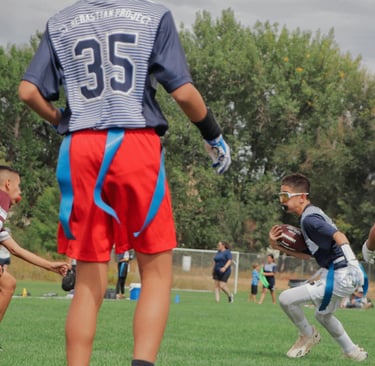
If you’ve been around youth sports for more than five minutes, you’ve probably heard parents whispering about divisions.
“Are they on the top team?”
“Are they playing A or B?”
“Are they in the elite bracket?”
“Should we move clubs so they can play higher?”
“Are they falling behind?”
And listen, I get it. Nobody wants to feel like they’re making the wrong choice for their kid. Nobody wants to look up three years from now and think, “We should have pushed harder.” Youth sports can create this weird pressure where every roster decision feels like a prediction of the future.
But here’s the truth parents and coaches need to hear:
Before age 12, the division your child is playing in is usually not nearly as important as the environment they’re developing in.
That doesn’t mean competition level doesn’t matter. It does. Kids need to be challenged. They need to play against athletes who push them. But there’s a big difference between healthy challenge and adult panic.
A 9-year-old playing in the second division is not doomed. A 10-year-old not making the top team is not “behind forever.” An 11-year-old who needs another year to grow physically, emotionally, or technically is not missing their shot.
They’re a kid.
And kids develop at different speeds.
The division label feels important because adults make it feel important
Let’s be honest. Most kids under 12 don’t naturally obsess over divisions. Adults usually teach them to care.
Kids care about playing. They care about their friends. They care about whether the coach likes them. They care about snacks, uniforms, scoring goals, making plays, and whether the ride home is going to be quiet or fun.
Parents care about the ladder.
And that ladder can get addictive. First it’s making the travel team. Then it’s making the top travel team. Then it’s making the top bracket. Then it’s getting more playing time on that team. Then it’s moving clubs. Then it’s private training. Then it’s showcase events. Suddenly, a child’s entire sports identity is being measured by where adults placed them at age 9.
That’s a lot of weight for a third or fourth grader.
The problem with focusing too much on division level too early is that it can turn youth sports into a status race instead of a development process. Parents start asking, “What level are they on?” instead of “Are they getting better?” Coaches start protecting wins instead of building players. Kids start thinking their value is tied to the logo, bracket, or roster placement.
That’s not a great foundation.
The better question is not, “Is my kid in the highest division right now?”
The better question is: Is this environment helping my kid grow?
Early division placement is often a snapshot, not a forecast
One of the biggest reasons we overvalue early division placement is that it feels official. A coach evaluated the kids. A roster was made. Teams were sorted. So it must mean something big, right?
Sometimes. But usually it means something much smaller:
This is where the child fits today, based on what the adults saw during a short evaluation window.
That’s it.
At younger ages, team placement often reflects current size, speed, confidence, coordination, aggressiveness, maturity, and experience. Some kids have early access to training. Some are physically ahead. Some are born earlier in the age group. Some are already comfortable in competitive settings. Some freeze in tryouts but are great learners over time.
There’s a well-known youth sports concept called the relative age effect, where kids born earlier in an age cutoff window often appear more advanced because they may be bigger, stronger, or more emotionally mature than younger kids in the same group. Research describes this as a performance advantage for kids born earlier in the selection year when trying out for select, age-restricted sports.
That matters because a lot of “top team” selections at younger ages can unintentionally favor kids who are simply more mature right now.
Not better forever.
Just more ready today.
And if you’ve coached long enough, you’ve seen this play out. The dominant 9-year-old is not always the best 15-year-old. The quiet kid on the lower team sometimes becomes a monster once confidence and coordination catch up. The late bloomer who couldn’t physically compete early may eventually pass kids who were ahead because they kept working, kept loving the game, and got the right coaching.
Development is not linear. Youth sports just keeps pretending it is.
The real danger: chasing divisions can cost kids the reps they actually need
Here’s the part parents really need to think about.
Sometimes moving up a division is great. But sometimes chasing the highest level too early puts a kid in a situation where they play less, touch the ball less, take fewer risks, and feel more pressure.
That’s not always development.
A child who plays meaningful minutes in a slightly lower division may grow faster than a child who sits, panics, or plays scared in a higher one. Especially under 12, reps matter. Confidence matters. Decision-making matters. Trying things matters.
If the higher division gives your kid:
good coaching,
fair opportunity,
enough playing time,
appropriate challenge,
and a positive learning environment, then great. Go for it.
But if the higher division mostly gives your kid:
less playing time,
constant pressure,
fear of mistakes,
limited touches,
and a coach who only trusts the top few players, then what are we really chasing?
Sometimes the best development move is not the most impressive-looking move.
Sometimes the best move is the one that keeps the kid engaged, confident, and growing.
Under 12 should be about building the athlete, not protecting a ranking
This is where parents and coaches need to zoom out.
Before age 12, kids should be building a foundation. That means fundamentals, movement skills, confidence, creativity, decision-making, effort habits, coachability, teamwork, and love of the game.
That foundation matters more than whether the team is labeled first division, second division, gold, silver, elite, premier, academy, select, super-select, or whatever new word someone invented this season.
A lot of sport science guidance warns against overdoing narrow, intense sport pathways too early. Early sport specialization is commonly defined as year-round training in one sport to the exclusion of other activities, often more than eight months per year before or during adolescence. AOSSM’s 2024 discussion on early specialization points out that this usually happens before or around age 12 and is tied to concerns around kids “falling behind.” (sportsmed.org)
The American Academy of Pediatrics has also emphasized the importance of rest and avoiding overuse, recommending at least one day off per week and two to three months away from a specific sport each year to help reduce overuse injury, overtraining, and burnout risk.
That doesn’t mean kids shouldn’t compete hard. It means we should stop treating age 9 division placement like a life decision.
Kids need room to grow into the athlete they’re becoming.
Not pressure to prove they already are one.
What parents should look for instead of division level
If your child is under 12, division level can be one piece of the puzzle. But it should not be the whole puzzle.
A better checklist looks like this:
Is my child getting better?
Not just winning games. Actually improving. Better touch, better decisions, better confidence, better effort, better understanding.
Is my child getting meaningful playing time?
Game reps matter. Practice reps matter. If they barely play, the “higher level” label may not be doing much for them.
Is the coach teaching?
A great youth coach explains, encourages, corrects, and gives kids room to try again. A coach who only manages wins may not be the best developmental fit.
Is my child still enjoying the sport?
This one matters more than adults want to admit. Project Play has reported that the average child quits most sports by age 11, often because the sport is no longer fun. (projectplay.org)
Is the challenge appropriate?
Too easy can stall growth. Too hard can crush confidence. The sweet spot is a place where kids are stretched but not drowning.
Does this environment support long-term development?
Can they play other sports? Can they rest? Are they allowed to make mistakes? Are they learning how to compete without losing themselves?
Those questions tell you way more than the division name.
Coaches need to stop selling fear to families
This one is for coaches and clubs.
If you want parents to trust you, stop making every decision sound like a crisis.
“If they don’t play top division now, they’ll fall behind.”
“If they miss this team, it’ll be hard to catch up.”
“If they don’t specialize now, other kids will pass them.”
That kind of messaging may fill rosters and sell programs, but it also creates anxious families and burned-out kids.
Good coaches tell the truth: there are many paths. Development takes time. Kids mature differently. A lower division with great coaching can be better than a higher division with limited opportunity. Competition matters, but so do confidence, reps, joy, and health.
Parents can handle honesty. What they struggle with is fear.
And kids don’t need adults turning every tryout into a defining moment.
When division level starts to matter more
To be fair, competition level does become more relevant as kids get older.
By the mid-teen years, if an athlete has serious high school, college, or advanced competitive goals, then appropriate level matters more. They need speed of play. They need tactical challenge. They need stronger opponents. They need environments that match where they’re trying to go.
But that’s exactly why the early years should be used wisely.
If we burn kids out before the age when higher levels really start to matter, we’ve missed the point. If we crush confidence at 10 because we were obsessed with a division label, we may be hurting the very development we’re trying to support.
The goal under 12 should be to build a kid who still wants the challenge later.
The takeaway
Parents, your kid is not falling behind because they aren’t in the highest division before age 12.
They’re not behind because they need another season of growth. They’re not behind because they’re developing confidence. They’re not behind because they’re playing meaningful minutes in a lower bracket. They’re not behind because they’re still figuring out what kind of athlete they are.
The youth sports world wants you to believe every placement is urgent.
Most of the time, it isn’t.
Under 12, the best environment is the one where your child is learning, playing, improving, competing, and still enjoying the game. If that’s happening, you’re not behind.
You’re building.
And building is exactly what youth sports should be doing at that age.
