
The Tryout Red Flags Parents Should Watch For
Spot the biggest tryout-time red flags that signal a coach or program you should avoid. This blog gives parents a simple checklist to choose a team where kids actually grow, feel supported, and enjoy the season.
5/20/20265 min read
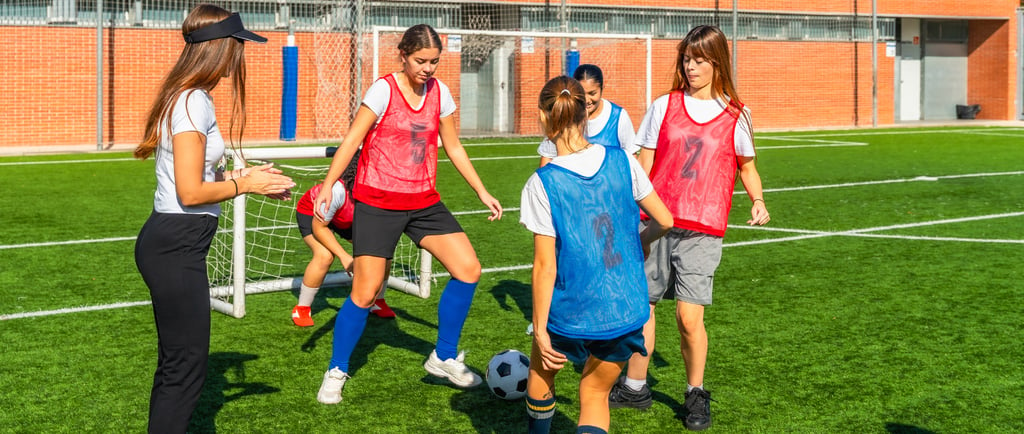
Tryout season has a funny way of turning normal parents into full-time detectives.
You’re watching drills, checking the vibe, trying to figure out who the coaches are, how the team is run, and whether your kid is about to have an awesome season… or spend the next 4–8 months stressed out, confused, and slowly hating the sport.
Talent and facilities don’t matter much if the coach is the wrong fit. A bad coaching environment can shrink confidence, create anxiety, and turn a sport your kid loves into something they “get through.” Research on youth sport participation and dropout has linked negative experiences and coaching-related issues (like favoritism, poor teaching, and increased pressure to win) with kids leaving sport.
So this blog is your “know what you DON’T need in your life” checklist—because the best time to avoid a bad coaching situation is before you’re already committed, paying fees, and trying to talk yourself into sticking it out.
First: what you’re really evaluating at tryouts
Parents often show up to tryouts watching for one thing: Does my kid make the team?
But if you want to make a smart decision, you’re also watching for:
How the coach treats kids in stressful moments
Whether the environment feels safe to learn
How the coach communicates expectations
What the coach values (development vs. winning at all costs)
Whether the coach seems like an adult your kid can trust
Because your kid will spend months in that coach’s orbit. And the environment matters. SafeSport has repeatedly emphasized that positive, respectful coaching environments help athletes feel more relaxed, confident, and willing to stretch themselves—while negative environments do the opposite.
Now let’s get into the red flags.
Red Flag 1: The coach uses embarrassment as a “teaching tool”
If you hear sarcasm, mocking, public callouts, or “tough love” that looks more like humiliation, take that seriously.
I’m not talking about firm coaching or holding standards. I’m talking about coaches who teach by making kids feel small:
yelling in a way that’s personal, not instructional
turning mistakes into a joke for the group
singling out one kid as “the problem”
using shame as motivation
Kids don’t learn well under humiliation. They play tight. They avoid risks. They stop asking questions. And for many kids—especially those still building confidence—this is the kind of environment that makes sports “not fun anymore,” which is one of the big reasons youth athletes drop out.
A good coach can be direct without being demeaning. If a coach can’t correct without embarrassing, you’re looking at a long season.
Red Flag 2: “Winning is everything” energy… at youth tryouts
Here’s a quick gut check: does the coach talk about development, teaching, and improvement… or is everything about winning, dominance, and rankings?
A win-at-all-costs climate is one of the most common roots of toxic youth sports experiences, and research has linked increased pressure to win and negative coaching behaviors with sport attrition.
You don’t need a coach who apologizes for wanting to win. Competitive goals are fine. The issue is how they pursue them.
Watch for phrases and behaviors like:
“We don’t make excuses here” (said to kids who are still learning)
“If you can’t handle pressure, you won’t play” (pressure as a threat)
immediate heavy conditioning as punishment
obsession with outcomes during tryout drills instead of teaching effort and fundamentals
A healthy coach can pursue winning while keeping the environment positive, respectful, and growth-focused—exactly the kind of climate SafeSport encourages in its positivity-focused coaching guidance.
Red Flag 3: Favoritism and “politics” vibe
This one is subtle sometimes, but you can often feel it.
Maybe the coach is talking to a small group of families nonstop. Maybe there are “known kids” getting different attention. Maybe the coach barely looks at certain players. Maybe feedback is only going to top performers while everyone else gets ignored.
Favoritism is specifically called out in youth sport literature as a coaching-related factor associated with kids dropping out.
Here’s why it matters: kids don’t need equal praise. They need equal respect and equal opportunity to be coached. The best coaches can develop a top player and still make the developing kid feel seen.
If you leave tryouts thinking, “I’m not sure this coach even noticed my kid,” that’s a data point.
Red Flag 4: The coach can’t explain the plan
A strong coach can explain, in plain language:
what they prioritize
how they handle playing time (even broadly)
what development looks like
how they communicate with parents
what the season schedule demands
A coach you should avoid is the one who’s vague, defensive, or overly secretive about basic expectations.
Parents don’t need every detail. But if a coach can’t articulate the philosophy, it usually means one of two things:
there isn’t a consistent philosophy, or
the philosophy wouldn’t sound great out loud.
Communication clarity is a “stress reducer.” When it’s missing, parents fill gaps with assumptions, and kids feel uncertainty. That’s when frustration spikes.
Red Flag 5: “We don’t need parents” or “parents are the problem” language
Look—parent behavior can absolutely be a problem in youth sports.
But if the coach’s default posture is hostility toward parents, that tends to create tension all season. Healthy programs set boundaries and expectations without creating an us-versus-them culture.
Also, the broader youth sports ecosystem is dealing with real pressures around adult behavior. The U.S. Center for SafeSport’s National Coaches Survey focuses on safety, burnout, and norms, reflecting that coach experiences and misconduct concerns are a real topic in sport right now.
The best coaches don’t pretend parents aren’t part of the system. They manage the relationship professionally:
clear communication channel
boundaries around postgame conversations
respectful tone
consistent standards
If a coach seems like they “hate parents,” you’re probably signing up for conflict.
Red Flag 6: Unsafe training culture: overuse, nonstop intensity, no recovery talk
This is a big one, especially with clubs.
If a coach is pushing year-round expectations, stacking practices plus “mandatory optional workouts,” and acting like rest is weakness—be careful.
Even if your kid can physically handle it now, the question is whether it’s sustainable and healthy over time. (And whether it leaves room for other sports and life.)
You don’t need a coach who treats youth athletes like mini pros. You need a coach who understands development: training hard and recovering, competing and staying healthy.
If the coach can’t talk about workload intelligently—or if the culture is “more is always better”—that’s a red flag.
Red Flag 7: The coach is more focused on control than teaching
Some coaches confuse discipline with control.
They run everything with fear: fear of mistakes, fear of getting benched, fear of being yelled at. It can look “organized,” but it’s not the kind of environment that builds confident athletes.
Positive coaching models emphasize coaching people, not just performance—creating environments that are motivating and respectful so athletes can take healthy risks and grow.
A great tryout sign is when you see correction delivered like this:
specific
calm
instructional
followed by a chance to try again
A concerning sign is when you see correction delivered like this:
emotional
personal
dramatic
heavy on consequences, light on teaching
Kids can handle high standards. They struggle under constant threat.
What to do at tryouts: a simple “parent checklist” that actually works
Instead of only watching your kid, watch the environment like a scout:
1) Watch the coach’s reaction to mistakes.
This is the real coach. Mistakes are where character shows up.
2) Watch how they talk to the least skilled kids.
A development-first coach still engages and teaches them.
3) Watch if kids look scared or free.
You can feel it. Free athletes try things. Scared athletes play not to mess up.
4) Listen for what gets praised.
Is it only goals and points? Or effort, response, teamwork, coachability?
5) Ask one or two direct questions.
Not aggressive—just clarity:
“How do you communicate with parents during the season?”
“What do you emphasize most at this age?”
“How do you help kids build confidence when they struggle?”
A coach worth joining won’t get defensive about those questions.
