
Volunteer Dad Coaches: The Quiet Backbone of Youth Sports
This blog celebrates the dads who step up to coach, while reminding them to soak in the special time they get with their kids before this season of life flies by.
6/17/20268 min read
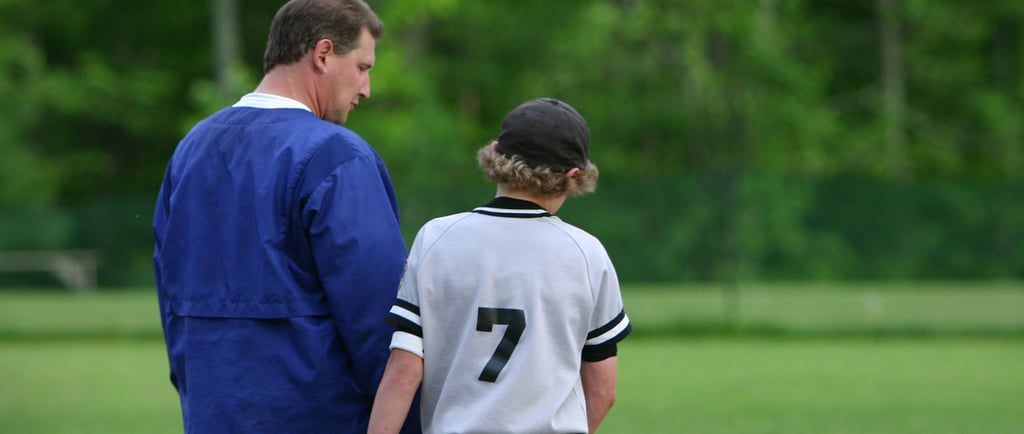
There’s a good chance your kid’s team exists because some dad finally said, “Fine, I’ll coach.”
Maybe he didn’t have a whistle. Maybe he didn’t have a practice plan. Maybe he hadn’t played the sport since middle school. Maybe he only raised his hand because the league email said, “We still need a coach or this team may not happen.”
And just like that, a group of kids had a team.
That’s the part of youth sports we don’t talk about enough. Before the uniforms, before the snacks, before the game schedule, before the team pictures, before the end-of-season medals, somebody has to step forward and say, “I’ll do it.”
A lot of times, that somebody is a dad.
Not always, of course. There are amazing mom coaches, grandparents, older siblings, teachers, former players, and community volunteers who make youth sports happen every day. But this one is for the dad coaches. The dads who leave work early, drag a bag of cones out of the garage, spend Sunday night figuring out a lineup, and somehow turn a random group of kids into a team.
Youth sports runs on these people.
The Sports & Fitness Industry Association reported that there are approximately 7.2 million youth team sports coaches in the United States, and it makes a pretty simple point: without enough coaches, leagues cap enrollment, teams don’t form, and kids lose opportunities to play. The same report noted that the number of youth team sports coaches has dropped from a peak of 8.4 million in 2022 to 7.2 million today, even as participation demand has rebounded and expanded.
That’s a big deal.
Because when a dad volunteers to coach, he’s not just filling out a roster requirement. He’s creating access. He’s giving kids a place to belong. He’s helping a league survive. He’s making it possible for 10 or 12 kids to have a season they might not otherwise get.
And if that dad happens to be coaching his own child too? That’s a pretty special window of life.
Volunteer coaches are more important than they probably realize
A lot of volunteer dad coaches downplay what they do.
“I’m just helping out.”
“I’m not a real coach.”
“I’m just trying to keep practice organized.”
“I hope I don’t mess this up.”
But here’s the truth: youth coaches are often one of the most important adults in a kid’s sports life. Project Play calls coaches the “backbone of youth sports” and points out that coaches serve as mentors, role models, and inspirations for young athletes. It also notes that, unlike many other adults who work with kids, youth coaches are often unpaid or underpaid volunteers with limited time and training.
That’s what makes the volunteer coach role so unique.
You’re not just teaching kids how to pass, shoot, swing, throw, defend, or run a play. You’re teaching them how to listen. How to respond after mistakes. How to be part of a team. How to show up for other people. How to compete without falling apart. How to win without getting full of themselves. How to lose without acting like the world ended.
That’s not “just helping out.”
That’s leadership.
And the impact can be huge. Project Play cites research showing that kids who played for trained coaches had a much lower next-year dropout rate than those who did not, and it also highlights that many youth coaches historically lacked training in motivational techniques and sport-specific skills. The point isn’t that every dad coach needs to become a professional. The point is that when volunteer coaches care enough to learn, communicate well, and create a positive environment, kids feel the difference.
A good volunteer dad coach can be the reason a kid stays in the sport.
A bad experience can be the reason they walk away.
That sounds heavy, but it’s also motivating. Because dads don’t need to be perfect. They just need to be intentional.
Dads, you don’t need to be an expert.
One of the biggest fears volunteer coaches have is that they don’t know enough.
And sure, knowledge helps. Practice plans help. Understanding the sport helps. But at the younger ages especially, kids need something more basic first: they need an adult who is steady, encouraging, organized, and willing to teach.
You don’t need to run a college-level training session for 8-year-olds. You need to create a practice where kids move, learn, laugh, and feel like they belong. You need to keep your instructions short. You need to let them make mistakes. You need to praise effort and response, not just goals and hits. You need to remember that a kid who feels safe to try is going to learn faster than a kid who is scared to mess up.
That’s where dad coaches can be so powerful. You already know what kids need in a human sense. They need structure, but not constant criticism. They need encouragement, but not fake praise. They need standards, but not shame. They need someone who can say, “We’re going to do this the right way,” and then actually model it.
And when you’re coaching your own child, that modeling gets even more important.
Because your kid is watching the coach. But they’re also watching Dad.
Coaching your own kid is a gift, but it’s also a balance
Let’s be honest: coaching your own child can be amazing… and weirdly hard.
You want to be fair to the team. You don’t want people thinking you favor your kid. So sometimes you overcorrect and become harder on your own child than everyone else. You correct them faster. You expect more from them. You use a tone with them that you’d never use with another player.
A lot of coaching dads have done this without even realizing it.
And it usually comes from a good place. You’re trying to avoid favoritism. You’re trying to teach toughness. You’re trying to help your kid get better. But from your child’s perspective, it can feel like Dad is always evaluating.
That’s the line every coaching dad has to learn how to walk.
Your child needs the coach version of you sometimes. But they also need the dad version of you all the time.
That means there are moments when the best thing you can do is stop coaching and just be their dad. After a tough game, they may not need a breakdown of their mistakes. They may need a ride home with no lecture. They may need you to say, “I loved watching you play,” and leave it there.
They may need to know that your love doesn’t rise and fall with their performance.
That’s the stuff they’ll remember.
Don’t miss the season while trying to coach the season
This is the part I hope every dad coach really hears:
This goes fast.
One day you’re tying their cleats, reminding them which way to run, and carrying half the team’s water bottles. Then suddenly they’re older, more independent, and you’re not needed in the same way. The little moments disappear quietly. No one tells you, “This is the last time they’ll want you to warm them up.” Or, “This is the last season they’ll look over after a good play to see if you saw it.”
You just realize it later.
And that’s why being a volunteer dad coach is so special. Yes, you’re giving something to the league. Yes, you’re helping the team. Yes, you’re serving your community.
But you’re also being given something.
You get extra time with your kid. You get car rides. You get practice nights. You get sideline moments. You get to see how they respond when things are hard. You get to watch them grow from a front-row seat.
Parents are already deeply tied to youth sports. Project Play reported that parents spend an average of 3 hours and 23 minutes connected to their child’s sports experience on a sports day, including driving, meals, communication, attending events, and managing gear. Dad coaches often carry even more of that time because they’re not just attending the experience. They’re helping create it.
That can be tiring. It can be frustrating. It can absolutely feel like one more thing on an already packed schedule.
But it’s also sacred, in a very normal, muddy-cleat, folding-chair, “where’s your other sock?” kind of way.
The best dad coaches make it about more than the scoreboard
Here’s where the magic happens.
A great dad coach can still care about winning. He can still teach kids to compete. He can still expect effort, discipline, and teamwork. But he understands the bigger picture.
The bigger picture is not the tournament record.
The bigger picture is whether kids are learning to love effort. Whether they feel confident enough to try. Whether they understand how to be good teammates. Whether they know how to respond when they mess up. Whether they want to come back next season.
And for your own child, the bigger picture is whether they experienced you as someone who helped sports feel meaningful, not heavier.
That doesn’t mean every practice is magical. It doesn’t mean every kid listens. It doesn’t mean parents never complain. It doesn’t mean your child always appreciates what you’re doing.
They probably won’t fully appreciate it now.
But one day, they may remember that you were there. Not just in the stands. Not just in the car. But there in the middle of it. Coaching, encouraging, teaching, showing up.
That matters.
A few things every volunteer dad coach should remember
You don’t have to know everything. Learn as you go. Ask for help. Use simple practice plans. Keep the kids moving. The best youth coaching is usually less about complicated drills and more about clear teaching, positive energy, and good organization.
You don’t have to be the loudest person on the field. In fact, you probably shouldn’t be. Calm authority beats constant yelling. Kids tune out noise, but they remember steady leadership.
You don’t have to turn every car ride into a coaching session. Let the ride home be a place where your kid can breathe. Sometimes the best postgame comment is simply, “I loved watching you play.”
You don’t have to chase perfection. You’re going to mess up. You’ll run a bad drill. You’ll say something clunky. You’ll forget the snack schedule or botch a substitution. That’s okay. Own it, learn, and keep showing up.
Most of all, you don’t have to earn your child’s love through coaching success. You’re Dad first. Coach second.
Always.
My takeaway
Volunteer dad coaches are one of the quiet forces holding youth sports together. Without them, a lot of teams don’t happen. A lot of kids don’t get the chance to play. A lot of communities lose one of the simplest and best ways kids learn teamwork, confidence, and resilience.
So if you’re a dad who raised your hand this season, thank you.
Thank you for giving your time. Thank you for making the schedule work. Thank you for teaching kids who aren’t always easy to teach. Thank you for stepping into a role that matters more than most people realize.
And if you’re coaching your own child, don’t forget to soak it in.
Not every moment will feel special when you’re carrying equipment, answering parent texts, and trying to get a bunch of kids to listen. But it is special. This season of life has an expiration date, and it usually arrives faster than we think.
So coach hard. Teach well. Set the standard. Be fair. Help the kids grow.
But every now and then, take a second during practice or a game and just look around.
Your kid is there. You’re there. You’re sharing something most dads would give anything to get back someday.
Don’t miss it while you’re busy coaching it.
