
Why Kids Perform in Practice but Freeze in Games — And What Coaches & Parents Can Do About It
Struggling to understand why young athletes perform well in practice but freeze in games? This blog breaks down the psychological reasons behind performance anxiety and offers expert tips for coaches and parents to help kids thrive under pressure.
1/27/20265 min read
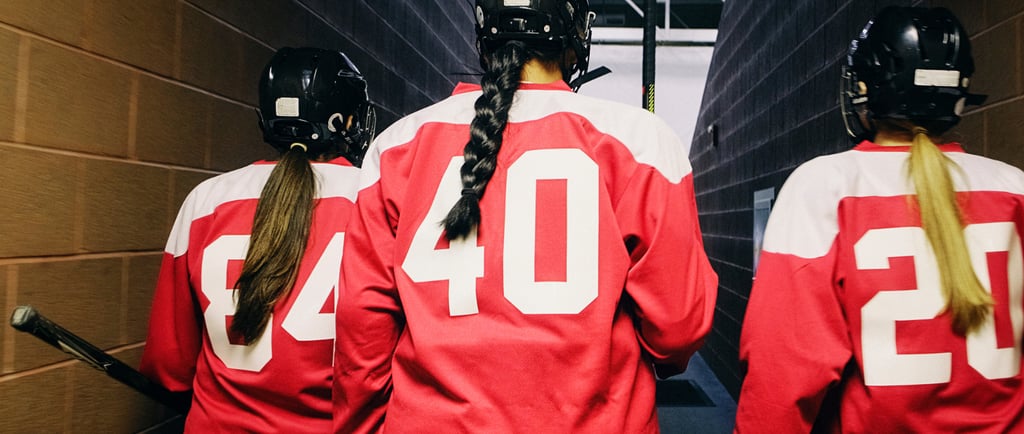
You’ve seen it a thousand times: a kid who nails every drill in practice suddenly turns quiet, hesitant, or just plain frozen when the whistle blows in a game. Maybe they fumble an easy pass, hesitate before shooting, or freeze up when their number is called. It’s confusing and frustrating for coaches — and heartbreaking for parents who know how good their kid really is.
But there’s a reason this happens — and it isn’t that the child “isn’t trying.” It’s complex, rooted in psychology, stress, expectations, and the kid’s developing brain. More importantly, there are ways coaches and parents can help bridge that gap so that performance more closely matches potential.
This post unpacks what’s really going on when a young athlete performs in practice — but struggles under game pressure — and gives you research‑based, practical tips you can use on the field, court, or ice.
Practice vs. Game: It’s Not the Same Environment
Even young kids pick up on subtle differences between practice and games:
Practice is predictable. Drills are repeated in a structured way. Mistakes feel expected.
Games are unpredictable, meaningful, and socially charged. Mistakes feel public.
That difference matters more than most people realize. Research in Child Development shows that environments with perceived evaluation (like competitions) activate stress responses in children — and that can temporarily impair performance.
In simpler terms: kids know when they’re being watched, evaluated, or measured — and their brains react differently.
So if you’ve ever said, “Why can’t they just play how they do in practice?” — the answer is: Because the brain perceives a game as a higher‑stakes environment, even if the adult in the situation doesn’t think it should matter.
The Brain on “Game Day” — Why Performance Can Drop
When a child anticipates judgment, comparison, or consequence, a few things happen neurologically:
1. Stress Hormones Increase
Cortisol and adrenaline spike, which can:
Make it harder to think clearly
Interfere with fine motor skills
Trigger survival responses (fight, flight, freeze)
In adults, this is known as “choking under pressure.” In kids, whose emotional regulatory systems are still developing, it’s even more pronounced.
2. Social Evaluation Triggers Performance Anxiety
Kids want to belong. They want approval. When they feel watched by teammates, parents, referees, or opponents, what psychologists call social evaluation kicks in — and with it, performance anxiety.
That’s not “stage fright” in the theatrical sense; it’s a deep‑wired survival instinct. In early development, human connection matters more than just about anything else — and being judged negatively by peers triggers a threat response in the brain.
3. Working Memory Gets Hijacked
Under stress, the brain prioritizes survival signals, which can temporarily push working memory and strategic thinking offline. That’s why a child who performs a skill perfectly in practice suddenly forgets what to do during a game.
This phenomenon is supported by research in Applied Cognitive Psychology showing that pressure can reduce working memory capacity, especially in younger populations.
So yes — the kid knows how to do the skill. They just can’t access it yet when stress takes over.
Emotional Drivers: Fear of Mistakes & Desire to Please
For many young athletes, the fear of making mistakes or fear of disappointing others is powerful — especially if they strongly identify as “athletic” or “good at sports.”
This mindset can lead to overthinking, hesitation, or even avoidance in games. Kids might think:
If I mess up, people will be mad.
My parents will be disappointed.
The coach will bench me.
As kids mature, they eventually learn that most of these fears are exaggerated. But for now? The game feels like a high‑stakes test every time.
A study published in Frontiers in Psychology found that kids with high performance anxiety often show significantly greater declines in game performance than in practice, especially when they care deeply about outcomes and perceptions.
And that’s where the coach — and parent — can intervene.
What Coaches Can Do: Strategies That Help Transfer Practice to Performance
1. Simulate Pressure in Practice — Gradually
If a game feels different, don’t wait for the game to teach them that. Introduce elements of pressure in practice.
Examples:
Timed drills
Small‑sided games with consequences (like a silly penalty if you lose)
Making cheers louder during certain reps
Start small, then build. The goal isn’t to make practice stressful — it’s to make kids comfortable with stress.
2. Praise Effort, Not Just Outcomes
Instead of “Good job making that shot,” try:
“I loved how you stayed focused there even when it was tough.”
“Nice hustle — that was a confident effort.”
This reinforces process over outcome. Research shows that kids with a growth mindset — where success is linked to effort and learning — experience lower performance anxiety and more consistent performance.
3. Teach Breathing & Reset Techniques
When you see hesitation or tightness in a game, bring them back to the basics:
Deep breaths
Exhale slowly
“We’ve practiced this 50 times — you’ve got this.”
These simple cues engage the parasympathetic nervous system and lower stress responses.
4. Reframe Mistakes as Information
In practice, mistakes are normal. But in games, kids sometimes treat mistakes as “disasters.” Normalize errors:
“That rep didn’t go as planned — cool, now we know what to adjust.”
“What did that teach you?”
This shift reduces pressure and helps kids focus on learning instead of judging.
What Parents Can Do: Support That’s Calming, Not Pressuring
Parents are part of the performance environment whether they like it or not. What kids feel from the sidelines matters.
1. Say Less, Support More
Instead of:
“Come on, don’t mess up!”
Try:“I love watching you play — you're learning every time.”
This moves kids from “fear of judgment” toward “sense of safety.”
2. Avoid Performance Labels
Words like:
“Star”
“Best player”
“Team MVP”
Can create pressure to perform perfectly.
Instead, use:
“You’re improving.”
“You worked really hard.”
“I’m proud of your effort.”
Kids internalize expectations — and positive ones build confidence.
3. Focus on the Experience, Not the Result
Ask questions like:
“What was fun today?”
“What did you learn?”
“What did you do that you’re proud of?”
This trains kids to value growth experiences over outcome results — leading to long‑term engagement and lower anxiety.
Why Confidence & Identity Matter
A child’s belief in themselves is one of the strongest predictors of performance — even stronger than skill level at times. According to research in the Journal of Sport & Exercise Psychology, athletes with high self‑confidence perform better under pressure, make faster decisions, and show greater resilience after mistakes.
Confidence doesn’t just appear; it’s built through:
Repeated successful experiences
Positive self‑talk
Supportive coaching language
Emotional regulation tools
Parent encouragement that emphasizes effort over outcome
So, if your young athlete freezes in games, it might not be that they don’t know what to do — it might be that they don’t believe they can do it when it matters.
Helping Kids Build Game‑Day Confidence
Here are a few tangible ways to nurture confidence in youth athletes:
Visual Rehearsal
Have kids imagine successful plays with all their senses — hearing the crowd, feeling the ball, seeing the result.
Research in Sports Science shows that mental imagery activates many of the same neural pathways as physical practice, reinforcing confidence and readiness.
Goal Chunking
Instead of telling a child to “play well,” give specific, achievable targets:
“Make good passing decisions”
“Communicate with your teammate”
“Keep your feet moving.”
These micro‑goals are manageable and give kids a sense of mastery, even in high‑pressure situations.
Post‑Game Reflection
Rather than “Did you win?” ask:
“What did you learn today?”
“What felt good?”
“What will you work on next?”
This reinforces growth mindset thinking and reduces pressure around outcomes.
Final Thought: Performance Under Pressure Is a Learned Skill
Kids aren’t born knowing how to handle game pressure — they develop it through exposure, experience, self‑regulation practice, emotional support, and confidence building.
So if your young athlete freezes in games, don’t assume they aren’t capable. Instead, understand that their brain is reacting to the meaning of the moment — and that with intentional guidance from coaches and parents, performance in games can begin to match performance in practice.
You’re not just coaching skills. You’re coaching confidence, courage, and resilience — the traits that matter most far beyond the playing field.
